July Grateful Dead Show Listening Guides Part 2


Welcome to this month's Grateful Dead Show Listening Guides!
This is part 2 (of 3) of the July Listening Guides.
We're covering July 11th - July 20th in this post.
July 1st - July 10th can be found here.
July 21st - July 31st can be found here.
If you like these reviews and you want to support me, please consider buying a copy of my book On This Day In Grateful Dead History: A Daily Listening Journal. They're $50 and I offer free shipping if you subscribe to my mailing list, where you'll get these writeups delivered. No spam, I promise!
Over time, as I've written these listening guides, I marked up my copy of the book like this:

The underlined songs are the ones I'm calling out as highlights (songs names that are bolded) in the listening guide, and the songs highlighted in yellow are the ones that Howard Weiner has identified as Jam Anthem renditions. I also write notes in the space provided if I'm feeling inspired or if there are any updates such as newly released material. Ultimately you can use it however you want, but this was my original intent with the book.
By the way, if you're new here, this is my month-by-month archive of my listening guides that gives you the most interesting and significant facts from Grateful Dead History, along with reviews of the music. If you'd like to stay up to date on new reviews and other information, you can subscribe here:
July
For the month of July, the Grateful Dead’s history feels incredibly vast, stretching from the raw, bluesy energy of the mid-60s all the way to the polished, stadium-filling era of the 90s. Reading through these shows, I was struck by the sheer variety of venues, from the intimate Lion's Share in 1970 to the massive crowd at Watkins Glen in 1973, where 600,000 people gathered for what became a legendary, mud-soaked event. It seems like July was often a month of transitions and milestones. For instance, the band played their final show at the Fillmore West in 1971, marking the end of an era for that iconic venue.
I found the evolution of the lineups particularly poignant during this month. We see the band jamming with Janis Joplin in 1970, where her chemistry with Pigpen was undeniable, and later, in 1972, sharing the stage with Dickey Betts and Berry Oakley of the Allman Brothers. The 1987 tour featuring Bob Dylan stands out to me as a fascinating collision of worlds, especially the Oakland show where the collaboration felt genuinely cohesive rather than just the Dead backing a legend.
There are also some heavy emotional markers in July. The death of Keith Godchaux on July 23, 1980, is a somber anniversary, as is the passing of Brent Mydland on July 26, 1990. I was particularly moved by Brent’s final run of shows at the World Music Theatre in 1990; he delivered his last performance on July 23rd, just days before he died, leaving us with final renditions of songs like "I Will Take You Home" and "Good Time Blues".
On a lighter note, there were plenty of quirks, like Bob Weir getting arrested in San Diego in 1980 after intervening in a backstage dispute, or the band braving a massive thunderstorm at Buckeye Lake in 1994 to play "Rain" to a soaked crowd. The month also features the band’s first-ever trip to Red Rocks in 1978, a venue that I think perfectly matched their atmospheric sound. Whether it was the "Wall of Sound" clarity of 1974 or the polished late-80s energy, July seems to capture the band constantly reinventing itself.
Significant historical events in Grateful Dead History for June
Willie Nelson’s Fourth of July Picnic (7/1/1978)
Bobby gets arrested after a show (7/1/1980)
Final Fillmore West concert (7/2/1971)
Red Rocks Debut (7/7/1978)
Janis Joplin jams with the band on stage (7/16/1970)
RIP Keith Godchaux (7/23/1980)
Historical and highly anticipated “Dylan & The Dead” concerts of 1987 (July 1987)
Brent Mydland's final show (7/23/1990)
RIP Brent Mydland (7/26/1990)
Happy Heavenly birthday to Dick Latvala (7/26/1943)
Watkins Glen Summer Jam (7/28/1973)
First Performances
To Lay Me Down (7/30/1970), Sugaree (7/31/1971), Mr. Charlie (7/31/1971), Mississippi Half-Step Uptown Toodeloo (7/16/1972), Weather Report Suite Prelude (7/21/1972), Day-O (7/6/1987), Knockin’ On Heaven’s Door without Bob Dylan (7/6/1987), Maggie’s Farm (7/19/1987), Gentlemen Start Your Engines (7/31/1988), Childhood’s End (7/20/1994), Matilda (7/20/1994)
Final Performances
Mountains of the Moon (7/12/1969), Blackbird (7/17/1988), I Will Take You Home (7/14/1990), Easy To Love You (7/18/1990), A Little Light (7/21/1990), Dear Mr. Fantasy (7/21/1990), Far From Me (7/22/1990), Hey Pocky Way (7/22/1990), Good Time Blues (7/23/1990)
Only Performances
Dancin’ in the Streets [as an encore] (7/13/1976), Shelter From The Storm [w/ Bob Dylan] (7/24/1987)
July Grateful Dead Show Listening Guide Index
This month we have a total of 84 listening guides. Here's an index of the first 28 shows reviewed for July 1st - July 10th. Click the link to jump to the listening guide, or just scroll down.
July 11th
7/11/1981 Alpine Valley Music Theatre, East Troy, WI

The July 11, 1981 show at Alpine Valley felt like a continuation of the high that started the night before in St. Paul—another excellent performance from a band that was firing on all cylinders. You can hear how tight they were, how in-sync the whole operation sounded.
The first set had that easy glide and subtle lift that '81 could hit when everything lined up. Tennessee Jed stood out with a nice rolling bounce—Jerry’s playing was loose but purposeful, and the vocal delivery had real warmth. The closing China Cat Sunflower > I Know You Rider made for a perfect peak to end the set—fluid and high-spirited with a ton of momentum behind it. I would’ve loved to have seen that one in person; it must’ve felt like the whole hillside was moving in time.
The second set leaned more into the storytelling side. He’s Gone > Truckin’ was soulful and steady, with Truckin' carrying a good bit of muscle in the outro jam. But the show really hit a stride in the post-Drums segment—The Other One > Stella Blue > I Need a Miracle > Goin’ Down the Road Feelin’ Bad > One More Saturday Night. The Other One cracked open with just the right amount of tension, then eased into a tender Stella Blue that Jerry handled with care. I loved how Miracle injected a jolt of life into the final stretch before transitioning into a rousing GDTRFB and a celebratory Saturday Night. And then there’s the Brokedown Palace encore—one of those send-offs that leaves you feeling full and quiet at the same time. A perfect exhale at the end of a show that had both heart and fire.
Music link: whole show AUD: https://relisten.net/grateful-dead/1981/07/11?source=339065 2nd set SBD: https://relisten.net/grateful-dead/1981/07/11?source=2177642
July 12th
7/12/1969 New York State Pavilion, Flushing Meadow, Queens, NY

The July 12, 1969 show at the New York State Pavilion is one of those oddball one-set performances that flies under the radar, but still has some unforgettable moments buried in the tape. SHNID 4645 is, as far as I know, the only complete recording, but it’s a tough listen—muddy, lo-fi, and a bit of a sonic endurance test. That said, it documents the last-ever performance of Mountains of the Moon, and while I wish I could say how strong it was, the audio’s just too rough to make a real judgment.
The real meat of this show—for me—lives in SHNID 136644, where the quality clears up a bit and you get the core jam sequence: Dark Star (which sadly fades in mid-flight) into The Other One > St. Stephen > The Eleven > Turn On Your Lovelight. That The Eleven > Lovelight segment is where the whole thing takes off. The Eleven is flat-out epic—rhythmically tight but wide open in its phrasing, and just pulsing with energy. And then comes Lovelight, which is easily one of the most unhinged, hilarious versions I’ve ever heard. Pigpen goes fully off the rails, egging Mickey on to step up to the mic while launching into this wild free-association rant about “your brown cow” and “let’s go get stoned!” It’s absurd, infectious, and completely in the spirit of the era. Then they drag a woman from the crowd into the banter, and Bobby, without missing a beat, suggests Pigpen “ask her something dirty.” It’s chaotic, ridiculous, and weirdly intimate—all the reasons I love '69 Dead rolled into one performance. It’s not a pristine recording, and it’s definitely not a polished show. But for those of us who like our Dead a little raw and rowdy, there’s gold here.
7/12/1976 Orpheum Theatre, San Francisco, CA

The July 12, 1976 show at the Orpheum Theatre marked the beginning of a six-night stand, and for me, it captured that unique mid-’76 vibe—mellow but meticulous. It was the first run back in San Francisco following their hiatus, and you can hear that mix of ease and focus coming through. The tempos are definitely more relaxed than other eras, which might not land for everyone, but when I’m in the right headspace, I love the way this show just flows. It reminds me a little of the Dead & Company pacing—never rushed, always deliberate—but still tight and expressive. Not edgy, exactly, but purposeful.
The first set brings some real sweetness. The Music Never Stopped has that clean, dialed-in feel the '76 versions often do, with Donna and Bobby locked in vocally. Tennessee Jed and Candyman both breathe easy and let the melodies unfold naturally, and then Lazy Lightning > Supplication gives the set a late burst of rhythm and tension. That transition still gets me—it’s compact but sharp.
The second set takes a more exploratory route, starting with a lush Help on the Way > Slipknot! > Franklin’s Tower. It’s not the wildest take of the suite, but it’s cohesive and smooth, and Jerry’s leads in Franklin’s have a nice laid-back swing. The highlight for me comes in Dancin’ in the Streets > Wharf Rat. Dancin’ is pure groove—soaked in that '76 funk—and when they drop into Wharf Rat, the entire mood shifts into something heavier, more introspective. It’s a beautiful contrast and a sign of how well they were reading the emotional contours of a set. This one’s all about touch and tone—what it might lack in edge, it makes up for in depth.
7/12/1987 Giants Stadium, East Rutherford, NJ

The July 12, 1987 show at Giants Stadium closed out a big weekend run, and while I wouldn’t call it flawless, it definitely had moments worth revisiting. This was one of those unique formats: two sets of the Dead followed by a third set backing Bob Dylan. The whole thing felt like a convergence of eras and energies, even if the execution didn’t always meet the ambition.
The first set bursts out of the gate with Hell in a Bucket > West L.A. Fadeaway, and the energy was immediate. Loser landed with a bit of extra weight, and Ramble On Rose had that joyful, swaying lift that always plays well in big outdoor venues. I thought When I Paint My Masterpiece was particularly inspired that night—Bobby really leaned into it—and then the band hit a solid stride with Promised Land > Bertha to wrap things up on a lively, rocking note. That whole set had the band sounding fired up and engaged.
The second set opened with Morning Dew, which was a welcome and emotional choice. Jerry delivered it with conviction, and while it didn’t stretch to epic lengths, it held up on feel alone. After that, though, the pacing felt a little compressed to me. Songs came in quicker succession and were played on the short side, almost like they were watching the clock. Still, the selections were good—the ideas were there, even if the delivery didn’t always land.
The third set, featuring Dylan, was more of a mixed bag. I’ve always felt that backing Dylan is a tall order for any band, let alone one as improvisational and groove-based as the Dead. His evolving arrangements can be hard to chase, and at times you could hear the disconnect. That said, a few moments did rise above. Memphis Blues Again felt tight and alive, Ballad of a Thin Man had real bite, and All Along the Watchtower was absolutely a Jam Anthem version—propulsive, urgent, and one of the best examples of the band locking into Dylan’s world rather than the other way around. I wouldn’t call the night essential, but it’s definitely fascinating—and there’s something to be said for watching these giants try to meet each other in the middle.
7/12/1989 RFK Stadium, Washington, DC

The July 12, 1989 show at RFK Stadium doesn’t always get a ton of buzz, but I’ve always found it to be a well-rounded performance with a handful of great moments and only a few minor hiccups. It’s partially officially released on Robert F. Kennedy Stadium, Washington D.C., July 12 & 13, 1989, and trust me—the sound quality on the release blows any circulating audience tapes out of the water. If you’ve got access to it, that’s the version you want to spend time with.
The first set has a bright and buoyant feel to it. Mississippi Half-Step Uptown Toodeloo rolls in with that easy glide that 1989 was so good at capturing—Jerry sounds confident and engaged right from the jump. Tom Thumb’s Blues is another standout for me; there’s a raw, road-weary charm to it, and it fits perfectly in that slot. Promised Land closes the set with punch and speed, a classic Bobby rave-up that sends the crowd into the break buzzing.
The second set opens up in fine form with Sugaree, a version that simmers and builds nicely without dragging. The groove in Man Smart, Woman Smarter really clicks too—Brent brings plenty of color and personality, and the band rides the rhythm without overplaying it. Eyes of the World doesn’t stretch too far but is played with clarity and purpose—Brent’s electric piano tone gives the whole thing a sunlit shimmer. Dear Mr. Fantasy wraps things on a soulful note, tender and gritty at once, with Jerry pouring real feeling into every line. It’s not a show built on wild risks or deep jams, but when it works—and it often does—it really delivers. Solid song choices, strong playing, and the bonus of that pristine soundboard release make this one well worth revisiting.
7/12/1990 RFK Stadium, Washington, DC

The July 12, 1990 show at RFK Stadium tends to fly under the radar a bit, but it’s packed with energy and a ton of high points. Part of it was officially released on View From The Vault, Volume 2, and having the footage really helps capture the vibe of that hot summer night. The band was in a strong groove here—tight, lively, and clearly having fun.
The first set wastes no time with Let the Good Times Roll > Bertha kicking things off with pure joy. Right away, the crowd is in it. Queen Jane Approximately is always a welcome addition, and this version is smooth and heartfelt. Stagger Lee has that laid-back swagger, and Cassidy rides a great pocket—fluid and a little trippy toward the end. But Tennessee Jed might be my favorite moment from the set—bouncy, confident, and played with extra lift.
The second set gets off to a hilarious start thanks to Phil telling everyone to “take a step back,” with Healy throwing in some demonic vocal effects for extra weirdness. It’s classic Dead absurdity and sets the tone for what’s to come. Honestly, the whole set flows so well that picking individual highlights feels like splitting hairs. Every tune connects, and the energy stays high throughout. There’s a consistency to the playing that makes the full set worth hearing front to back—nothing feels phoned in. My favorite parts are Box Of Rain opener, Dark Star > Drums > Space > Watchtower > Dear Mr. Fantasy > Hey Jude Reprise > Touch Of Grey. It's one of those nights where the band doesn’t take wild risks, but everything lands. If you’re in the mood for a tight, upbeat 1990 show with charm and cohesion, this one delivers.
July 13th
7/13/1976 Orpheum Theatre, San Francisco, CA

The July 13, 1976 show at the Orpheum felt like the band shook off the last bits of rust from the night before and settled into a groove that had more edge and momentum. For me, this one’s a clear step up from 7/12—it still carries that mellow, post-hiatus flow, but there’s more intent behind the playing, more punch in the delivery. It’s not a wild night, but it’s focused, confident, and well-structured, and I find myself returning to it more often.
The first set has a great arc. Peggy-O is played with real tenderness—Jerry’s phrasing feels especially careful and expressive. Then the band hits a gorgeous stretch with Crazy Fingers > Let It Grow > Might As Well. That sequence alone is worth the listen. Crazy Fingers rolls out like a slow, shimmery wave, and then Let It Grow picks up steam, giving the set a jolt of dynamic energy. Might As Well caps it off with that classic ‘76 looseness and warmth.
The second set is one of the strongest of the Orpheum run. The Music Never Stopped grooves hard out of the gate—tight vocals, playful syncopation, and a jam that stretches just far enough. It Must Have Been the Roses is delivered with a sweet, patient touch, and then comes the true centerpiece: St. Stephen > Not Fade Away > Stella Blue > St. Stephen > Sunshine Daydream. That entire sequence flows effortlessly. Stephen is sprightly but not rushed, and the return into it after Stella feels earned and celebratory. It’s the kind of stretch that shows off how good the band was at pacing and mood during this era. And then there’s the Dancin’ in the Streets encore—the only time they ever used it in that slot. Totally unexpected and completely fun. Not a barnburner, but a perfect cap to a show that walks the line between thoughtful and joyful.
7/13/1984 Greek Theatre, UC, Berkeley, CA

The July 13, 1984 show at the Greek Theatre is one of those shows that lives in the lore for good reason. It’s got the kind of setlist that practically dares you not to hit play—and once you do, the payoff is huge. There’s a mystical quality to this one, maybe from the magic of the Greek itself, or maybe from the lunar eclipse and shooting star that reportedly lit up the sky that night. Whatever it was, the energy felt cosmic.
The first set is strong right out of the gate. Bertha > Greatest Story Ever Told brings that classic summertime swagger, and Might As Well seals things off with a lighthearted punch that felt perfectly placed. Everything’s played with confidence—the kind of set that gets you moving without ever feeling forced.
But the second set is where the show becomes a story. Scarlet Begonias > Touch of Grey > Fire on the Mountain is a strange and beautiful sequence—Touch slotted between Scarlet and Fire is an unusual move, but it works. The transitions are tight, and there’s a kind of celebratory looseness that flows through the whole segment. After Space, The Wheel rolls in gracefully, lifting the vibe just before the final surprise. And that’s where it all explodes: the Dark Star encore. Only the second time they’d ever used it in that slot, and the first time the song had appeared in 169 shows—since New Year’s Eve 1981. The crowd’s reaction must’ve been absolutely electric. You can hear the stunned joy in the tape, and it plays out like a reward for those who held on to the dream of hearing it return. If that wasn’t enough, the moon eclipsing above and a shooting star crossing the sky just added to the myth. It’s one of those “you had to be there” moments… but the tape gets you pretty damn close.
7/13/1985 Ventura County Fairgrounds, Ventura, CA

This July 13, 1985 show at the Ventura County Fairgrounds has a breezy energy to it that I really enjoy. It’s got that classic West Coast summer feel—laid-back but still full of life—and the setlist is quirky in the best way. Be sure to check this one out. It’s one of those shows that sticks with you for its charm and unpredictability.
The first set gets off to a unique start with One More Saturday Night > Fire on the Mountain, which is a pretty wild way to open. The energy shift between those two songs actually works better than you might think, and it instantly sets the tone for a set that’s going to take a few left turns. Dupree’s Diamond Blues brings that fun bounce, and Jerry sounds totally locked into the storytelling. Later on, Bird Song > The Music Never Stopped closes the set with some real beauty—Bird Song stretches out nicely, and Music arrives with tight vocal interplay and a jam that really pops by the end.
The second set finds its backbone in a confident, well-paced Terrapin Station—delivered with that mid-’80s grandeur that doesn’t rush anything. Then the band dives into a long, compelling sequence: The Wheel > Cryptical Envelopment > The Other One > Comes a Time > Around and Around > Sugar Magnolia. It’s a wild ride that moves from psychedelic swirl to emotional center to pure rock-and-roll release. Cryptical and The Other One crackle with focused chaos, and Comes a Time is the emotional anchor—Jerry gives it everything. The final pairing of Around and Around > Sugar Magnolia seals it with a burst of sunshine and stomp. There’s something about this show that feels loose but purposeful. It’s not a flawless performance, but the song choices and the way they move through the second set give it a character all its own. Definitely a fun one to revisit.
7/13/1989 RFK Stadium, Washington, DC

The July 13, 1989 show at RFK Stadium is another strong outing from that summer run—tight, emotional, and full of vivid moments that stick with me. It's officially released on Robert F. Kennedy Stadium, Washington D.C., July 12 & 13, 1989, and the mix on that set brings a real polish that helps showcase just how dialed-in they were.
The first set kicks off with Hell in a Bucket, and while it might be a predictable opener, this one comes in hot—full of swagger and vocal grit. Cold Rain and Snow follows with just the right amount of bounce and bite. Jerry’s voice and phrasing are right where they need to be, and the band supports it with precision. The real standout for me is Let It Grow—they really stretch it out, and it feels both fiery and fluid, with some tight rhythmic interplay that gives the jam extra propulsion.
The second set is a little moodier but no less compelling. He’s Gone > Looks Like Rain > Terrapin Station offers a gradual climb from reflection to grandeur. He’s Gone is heartfelt, Looks Like Rain gets a beautifully restrained reading from Bobby, and Terrapin brings that sweeping, stately feel that always elevates a set. The late-set pivot into The Other One > Wharf Rat brings a welcome charge of psychedelia followed by emotional resolution. The Other One has teeth, and Wharf Rat closes things with warmth and gravity—Jerry really leans into the storytelling. It’s a show that’s less about deep exploratory jams and more about strong ensemble playing, solid song choices, and emotional pacing. And on that front, it delivers.
July 14th
7/14/1976 Orpheum Theatre, San Francisco, CA

The July 14, 1976 show at the Orpheum is a real gem from that post-hiatus stretch, and one I reach for when I want something off the beaten path. The setlist alone is enough to raise eyebrows—in the best way. Songs that usually anchor a second set show up early, while others typically saved for later closers are threaded deep into the back half. It gives the whole show a fresh, unconventional flow that I find totally engaging.
The first set gets things going with an early Scarlet Begonias, and while it doesn’t stretch out like it would in later years, it’s got a sweet, rolling momentum that really pulls you in. But the heart of the set is the sequence: Playing in the Band > Drums > The Wheel > Jam > Playing in the Band. That stretch is vintage ’76—spacious, intricate, and deeply conversational. The Wheel is especially luminous, floating right out of Drums with a kind of ease that feels almost suspended in midair. The post-Wheel jam goes properly spacey, dissolving structure before finding its way back into the Playing reprise like a soft landing after a long flight.
The second set builds around some rich transitions and patient development. Let It Grow > Eyes of the World is the kind of pairing that never misses for me—Let It Grow brings the energy up, and Eyes settles into that lighter funk shuffle that the band leaned into so well during this period. From there, Wharf Rat > The Other One > The Music Never Stopped closes the loop with emotional depth, psychedelic punch, and groove-heavy release. That final trio really balances the reflective and the explosive in classic Grateful Dead fashion. The whole night is a deep dive into mood and texture, with the band showing off their ability to reshape expectations without losing the thread. I love when they play with format like this—and this show nails it.
July 15th
7/15/1984 Greek Theatre, UC, Berkeley, CA

The July 15, 1984 show at the Greek wraps up one of my favorite three-night runs the Dead ever pulled off. Coming off the high of 7/13 and 7/14, I wouldn’t have blamed them for taking their foot off the gas—but they absolutely didn’t. This one is bursting with energy, surprises, and that uniquely joyful Greek Theatre vibe. It’s the kind of show where even the oddball moments feel perfectly placed.
The first set jumps out with a bouncy Dancin’ in the Streets > Bird Song combo that sets the tone early. Dancin’ has that bright, peppy feel—tight without being stiff—and Bird Song spreads out into a dreamy, drifting jam that feels like it could float right up the canyon walls. Ramble On Rose delivers that singalong sweetness, played with just enough swing to keep it fresh.
But it’s the second set where things really take off. They come out with a total curveball—Why Don’t We Do It In The Road? > China Cat Sunflower > I Know You Rider. This would be the only time they ever played that song to open the second set. The transition from the chaos of Why Don’t We Do It In The Road to the clarity of China Cat Sunflower in that combo is magic, and includes a comical “why don’t we do it in the drums!” verse. China > Rider is sharp and full of light, with Jerry’s leads slicing through the Greek air like a breeze. Then Playing in the Band > Uncle John’s Band forms the heart of the second set, both songs flowing easily and leaning into open spaces without losing structure. The jam out of Playing is particularly fluid, and Uncle John’s shimmers with that summertime warmth. A punchy Not Fade Away closes the set on a high—tight, driving, and full of crowd energy. It’s not just a “fun” show—it’s a great one, with a unique spirit and a band still pushing themselves even at the tail end of a big run.
7/15/1988 Greek Theatre, UC, Berkeley, CA

The July 15, 1988 show at the Greek is a great slice of late-’80s Dead—a tight, energized performance with a laid-back edge that fits the venue perfectly. The band sounds locked in, and even though Jerry stumbles over a few lyrics here and there, it never feels like it derails the flow. If anything, it adds to the charm. There’s an ease to the whole show, but also a spark—you can tell they’re tuned into each other.
The first set kicks off with a groovy Shakedown Street that finds its footing early and settles into a nice pocket, then slides cleanly into a punchy Walkin’ Blues. It’s one of those pairings that just works, with Jerry and Bobby playing off each other in a way that keeps the energy moving. Later in the set, Cassidy > Bertha closes things down with flair—Cassidy builds tension with its usual rhythmic weave, and Bertha bursts in like sunlight through the trees, bright and joyful.
The second set features a lush Scarlet Begonias > Fire on the Mountain that doesn’t overextend itself but still gives space for some expressive soloing. The jam between the two is fluid and glowing, and Brent in particular adds a lot of color with his keyboard lines. Later on, the band drops into The Wheel > Gimme Some Lovin' > Morning Dew, and it’s one of the stronger closing stretches from that era. The Wheel rolls in smooth and steady, Gimme Some Lovin’ injects a shot of raw enthusiasm, and Morning Dew delivers a heavy, emotionally charged finish—one of those versions where Jerry’s voice may be a little fragile, but the playing more than makes up for it. The encore with a rare (2nd of only 6 times) Lovelight, but it feels kind of rushed to me. All in all, this show captures that loose-but-focused summer vibe the band could still tap into in ’88, especially in a setting as intimate and storied as the Greek.
July 16th
Janis Joplin jams with the band on stage (7/16/1970)
7/16/1970 Euphoria Ballroom, San Rafael, CA

The July 16, 1970 show at the Euphoria Ballroom may not circulate in full, but what we do have is gold—especially the Lovelight with Janis Joplin. That version alone makes the show worth revisiting. It’s loose, sprawling, and more about the vibe than the structure, but that’s kind of the point. The interplay between Pigpen and Janis is a riot—full of back-and-forth banter, howling encouragement, and that unfiltered joy they both did so well. At one point Janis laughs, “It ain't music but it's a lot of fun, man!”—and I couldn’t agree more. It’s raw, unpredictable, and totally different from her usual commanding, emotionally charged style. But she had the vocal chops to slide right into Pig's world and make it her own.
The second set, or at least what we have of it, is solid in its own right. It’s not aiming to blow minds, but the energy is steady, and I keep coming back to the version of Attics of My Life—fragile and heartfelt, with harmonies that feel almost suspended in air. It’s a beautiful moment tucked into a night that, while rough around the edges, has some real magic.
Music link: Set 1 with Janis https://relisten.net/grateful-dead/1970/07/16?source=2171731 Set 2: https://relisten.net/grateful-dead/1970/07/16?source=335661
7/16/1972 Dillon Stadium, Hartford, CT

The July 16, 1972 show at Dillon Stadium has always felt like a natural continuation of the energy the band brought back with them from Europe. There’s something unpolished but deeply confident about this performance, like they were still riding that creative momentum and letting it stretch out across new ground. Even though much of the first set only circulates through a rough audience recording, it still carries weight—especially for being the debut of Mississippi Half-Step Uptown Toodeloo. That version, in all its murky fidelity, is already something special. The vocal phrasing is different, the band is listening closely to each other, and it just feels right. I’d give anything to hear a clean board of it someday.
The second set, thankfully, sounds beautiful and delivers in a big way. The jam centerpiece of The Other One > He’s Gone > The Other One is one of those 1972 explorations where themes drift and reform with real purpose. He’s Gone feels reflective and unhurried in the middle, almost like a breath before they plunge back into the storm. But what really lifts the set into something unforgettable is the guest appearance from Dickey Betts and Berry Oakley. Not Fade Away > Goin’ Down the Road Feelin’ Bad > Hey Bo Diddley just pops with joy and swagger. The Dead’s open-eared approach meshed beautifully with the Allmans’ southern fire, and the result is a closing stretch that’s as playful as it is powerful. It’s a show that reminds me how rich and unpredictable that post-Europe ’72 stretch could be. They weren’t coasting—they were still pushing. And with guests like that? Pure magic.
7/16/1976 Orpheum Theatre, San Francisco, CA

The July 16, 1976 show at the Orpheum felt like a real homecoming—the band’s first San Francisco run after the long break, and by this fourth night, they were in a clear rhythm. There’s a level of polish throughout this show that I really appreciate. Even though this era gets knocked by some for being too mellow or slow-paced, I think this night proves they could still bring heat when they wanted to—and the jams have depth and real direction.
The first set is full of standouts. Cold Rain and Snow kicks things off with that crisp, staccato energy that the '76 versions nailed, and Big River barrels through with tight, punchy momentum. Brown Eyed Women is sweet and swinging—clean vocal delivery and just the right amount of bounce. Peggy-O is one of the most delicate moments of the set, Jerry playing with real restraint and tone, and then they close it with a fantastic The Music Never Stopped > Scarlet Begonias. That transition is smooth and unexpected, and Scarlet shines in its standalone '76 form—laid-back but intricate.
The second set takes the exploratory path, and that’s where the show really opens up. Playing in the Band > Stronger Than Dirt > Cosmic Charlie > Samson and Delilah > Spanish Jam is a powerhouse sequence. Playing pushes out into space, and then suddenly Stronger Than Dirt drops in—one of the few times it popped up in '76, and it lands beautifully. Cosmic Charlie has that stumbling, dreamlike quality that always charms me, and Samson comes charging out of the gate right after, full of energy and grit. But the real peak is the Spanish Jam—a true Jam Anthem version. It’s expansive, fluid, and drenched in mood. You can feel the band drawing on that primal undercurrent, with Garcia and Keith weaving lines around each other that ebb and surge like waves. This one blends elegance and edge in a way that’s uniquely '76. Every note feels considered, but it never sounds constrained. A quietly powerful night in a run full of gems.
7/16/1988 Greek Theatre, UC, Berkeley, CA

The July 16, 1988 show at the Greek Theatre is one of those summer concerts that just hits right. The band feels loose but focused, and there’s a relaxed confidence to the whole thing that only a venue like the Greek can inspire.
The first set opens with a stellar The Music Never Stopped > Sugaree pairing—such a strong way to kick things off. Music sets the groove with a crisp, high-energy pulse, and Sugaree just melts out from it, smooth and patient with some truly expressive soloing from Jerry. That combo alone makes the show worth grabbing. Later in the set, Far From Me brings a little grit and attitude—Brent’s vocals have bite—and Bird Song spreads its wings with one of those wide-open, soaring jams that ’88 still pulled off when the mood was right.
The second set is a satisfying ride from start to finish. China Cat Sunflower > I Know You Rider is as bright and joyful as ever, the kind of summertime groove you want to be spinning into twilight. Terrapin Station follows with real weight—steady, deliberate, and beautifully delivered. Then things stretch out with a thunderous The Other One > Stella Blue pairing that contrasts wild energy and quiet reflection perfectly. And the Knockin’ on Heaven’s Door encore is the kind of send-off that leaves everything glowing—tender, unhurried, and full of grace. This one’s not just about standout versions—it’s the arc of the whole night. Everything flows, everything connects. Classic late-’80s Dead at a venue that always seemed to pull something special out of them.
7/16/1990 Rich Stadium, Orchard Park, NY

The July 16, 1990 show at Rich Stadium is one of those big outdoor summer gigs that fires on all cylinders—great setlist, high spirits, and a band that sounds both loose and locked in. There’s a warmth and lift to this night that hits me every time I cue it up.
The first set sets a confident tone right out of the gate with Hell in a Bucket, all grit and swagger, and then shifts gears into a sparkling Mississippi Half-Step Uptown Toodeloo—Jerry’s leads have that soaring, lyrical quality that always gets me. Loose Lucy brings the party energy, and High Time lands like a cool breeze, tender and perfectly placed. But it’s the Let It Grow > Don’t Ease Me In closer that really caps it off for me—Let It Grow stretches and peaks with purpose, and they ride the momentum straight through Don’t Ease with a grin.
The second set opens in full celebration mode with Sugar Magnolia > Scarlet Begonias > Man Smart, Woman Smarter—a flow that’s bright, bouncy, and full of joy. The transitions are surprisingly smooth, and Brent adds some real sparkle along the way. Then Truckin’ rolls in with big swagger, unfolding into an open Jam that includes a Mind Left Body theme. It doesn’t overreach but feels purposeful—like the band is stretching out without losing their footing. From there, Wharf Rat > Around and Around > Sunshine Daydream brings a great emotional arc: melancholy reflection into full-tilt release. And the Brokedown Palace encore is just the right kind of goodbye—tender, rich, and quietly celebratory. It’s the kind of show that doesn’t need to be defined by huge surprises or deep dives—it just works. Every segment, every tune, contributes to the overall feeling that this band, in this moment, still had a whole lot of magic to give.
July 17th
7/17/1976 Orpheum Theatre, San Francisco, CA

The July 17, 1976 show at the Orpheum is one of my absolute favorites from that run, and hearing it on Dave’s Picks Volume 18 just reinforces how dialed-in the band was by this fifth night. There’s a calm confidence to the playing, the kind of tight, expressive phrasing and patience that defines the best of ’76.
The first set is remarkably consistent, filled with tunes that may not be flashy on paper but are delivered with such polish and attention to detail. Mississippi Half-Step Uptown Toodeloo opens with grace and momentum, building beautifully through its arc. Deal punches hard in the solo, with Garcia letting it rip while keeping it inside the lines. Peggy-O is delicate and haunting—one of those versions where Jerry seems to hang on every word. And Big River brings that clean, galloping energy before the whole set crests with a warmly jammed Sugaree and a lively Johnny B. Goode closer.
The second set is what really puts this show on the map for me. Donna is absent for this whole set, but I’m not sure why. Comes a Time > Jam > Drums > The Other One > Eyes of the World > The Other One > Goin’ Down the Road Feelin’ Bad is a sequence that unfolds with real narrative flow. Comes a Time is especially heartfelt—slow and aching but never dragging. The jam out of it takes its time, has a distinct The Eleven rhythm to it, but eases through delicate transitions before dissolving into Drums.
Then the band storms into The Other One, briefly exits into a light-footed Eyes, and charges right back into The Other One again, creating this ebb and surge that feels like a conversation. GDTRFB is the natural landing pad—joyful and driving. And if that wasn’t enough, they come back for a second encore of Not Fade Away that stretches out for over 14 minutes. It’s one of those rare, celebratory blowouts—groovy, communal, and totally unhurried. A perfect exclamation point on a show that blends depth, flow, and finesse.
7/17/1982 Ventura County Fairgrounds, Ventura, CA

The July 17, 1982 show at the Ventura County Fairgrounds is one of those under-the-radar gems that really delivers. It’s got energy, character, and a few curveballs that make it worth revisiting. Being the first night of a two-show run, the band sounds fresh and engaged—there’s a looseness here, but not at the expense of focus.
The first set has a steady pulse right from the top. Bertha > Greatest Story Ever Told kicks things off with swagger and sunshine, and They Love Each Other settles into a relaxed but warm groove, the kind of version that just breezes by. The Me and My Uncle > Big River pairing keeps the set galloping, and then they drop a rare surprise—Truckin’ to close the set. That’s the only time they ever did that, and it totally works here. It’s punchy, slightly unhinged, and has a cool finality to it that’s surprisingly satisfying in that spot.
The second set plays it loose but confidently. Playing in the Band > China Cat Sunflower > I Know You Rider is an unusual sequence that pulls you right into the heart of the show. The Playing jam is exploratory without drifting too far, and the transition into China Cat is genuinely unexpected. It all makes for a flowing, slightly left-field stretch that lands beautifully in Rider. Later, the Playing reprise brings things full circle—tight, deliberate, and totally earned. And the Baby Blue encore is a perfect closer—tender and honest, with Jerry delivering it like a quiet sendoff under open skies. This show has a certain charm that keeps drawing me back. It’s not about monster jams or rare bust-outs—just thoughtful playing, unusual flow, and a touch of that Ventura magic.
7/17/1989 Alpine Valley Music Theatre, East Troy, WI

The July 17, 1989 show at Alpine Valley is an absolute gem—captured perfectly on Downhill From Here. It kicks off a strong three-night run and stands out on its own as a beautifully played, emotionally rich night that hits all the right notes.
The first set runs long, with ten songs that are all delivered with confidence and polish. Let the Good Times Roll sets the tone with a loose, welcoming vibe, and Cumberland Blues follows it up with grit and bounce—tight harmonies and a brisk pace that never wavers. When I Paint My Masterpiece is one of those late-’80s versions that really works, and Push Comes to Shove brings that breezy charm I’ve always loved. But it’s The Music Never Stopped that really ties the set together—crisp, layered, and just overflowing with momentum.
The second set wastes no time lifting off. China Cat Sunflower > I Know You Rider has that expansive glow, and the segue into Playing in the Band feels completely natural. From there, it’s a seamless journey into Uncle John’s Band > Standing on the Moon, which was stunning on tape and must’ve been magic in the moment—especially with that full moon rising above the hills behind the venue. Standing on the Moon drips with poignancy; Jerry’s vocal delivery is spine-tingling. Post-Drums, they keep the energy high with Goin’ Down the Road Feelin’ Bad > Not Fade Away, both played with drive and enthusiasm. Then comes the real surprise: And We Bid You Goodnight, the first one in 766 shows since 12/31/1978. Hearing that come out of nowhere must’ve floored the crowd. They cap it all off with a fiery Johnny B. Goode, and just like that, night one is in the books with a perfect exclamation point. It’s one of those shows that balances historical weight, inspired playing, and communal joy—all under a summer night sky.
July 18th
7/18/1972 Roosevelt Stadium, Jersey City, NJ

The July 18, 1972 show at Roosevelt Stadium is one of those marathon nights where the band seems tapped into something deeper from start to finish. Three full sets, each with its own personality, and a handful of moments that feel absolutely essential to the ‘72 canon.
The first set lays a beautiful foundation. Bird Song is patient and flowing, with Garcia’s leads cascading like water—one of those versions that seems to float above the crowd. Black Throated Wind has that tight, swaggering urgency that Weir brought out so well on this tour, and China Cat Sunflower > I Know You Rider surges with momentum, brimming with that Europe-’72 energy still hanging in the air.
The second set kicks off with a standalone Playing in the Band, and it’s no throwaway—there’s some real adventurous jamming here, winding deep into the ether before snapping back clean. Brown Eyed Women is sharp and upbeat, while Tennessee Jed delivers with extra punch, balancing swagger and swing. But the real journey begins with Truckin’ > Dark Star > Comes a Time—a stretch that opens the portal wide. Truckin’ ramps up with swagger, but it’s the dive into Dark Star where things really lift off. The jam is expansive, exploratory, and immersive, moving with that slow confidence that makes 1972 versions so special. And when Comes a Time enters, it’s like the ship returns to Earth, only to touch down in pure emotional gravity—tender, aching, and complete.
The third set closes things out with power and joy. Sugar Magnolia brings the late-night voltage, and the final suite—Not Fade Away > Goin’ Down the Road Feelin’ Bad > Not Fade Away—is a perfectly rowdy sendoff. It's not just a reprise—it’s a full-circle celebration, played with fire and heart. Start to finish, this one flows like a full arc—curious, cosmic, and deeply satisfying. Just pure 1972 magic, stretched across three big chapters.
7/18/1976 Orpheum Theatre, San Francisco, CA

The July 18, 1976 show at the Orpheum capped off a six-night run in style. There's a celebratory undercurrent all night, like the band knew they’d found something in these shows and were ready to let it peak one final time. The first set has its moments, even if it gets overshadowed a bit by the monster set that follows. I really enjoy the way Mississippi Half-Step Uptown Toodeloo unfolds here—graceful and expressive without feeling too careful. Scarlet Begonias hits that dreamy ’76 stride, loose but precise, and The Music Never Stopped closes the set with real punch, its jam blooming wide before reining back in for a solid landing.
But the second set is the real story. Might As Well bursts out with bright energy and a sense of lift, and Samson and Delilah keeps that drive going with a little extra bite in the rhythm section. Lazy Lightning > Supplication is one of my favorite versions—it’s a Jam Anthem performance for sure. The transition is tight, and the jam that follows just pours out like a storm barely contained, shifting time and mood with total confidence. From there, the rest of the set rides that same momentum. The flow is seamless, the transitions feel intuitive, and everything lands with intention. It’s less about deep space and more about groove and cohesion. To me, this night ties a ribbon around the Orpheum run. It balances precision with playfulness, structure with spontaneity—a satisfying final word in a stretch of shows that found the band refining a new sound in real time.
7/18/1982 Ventura County Fairgrounds, Ventura, CA

The July 18, 1982 show at the Ventura County Fairgrounds closes out the two-night run with another fired-up performance under the California sun. The band comes out swinging, and there’s a sense of looseness that feels just right for the setting—plenty of energy without sounding rushed.
The first set is full of punchy, well-played standouts. New Minglewood Blues kicks things off with grit and swagger—Bobby digs in and lets it rip. Loser hits all the right notes emotionally, with Jerry’s solo stretching just enough to give it some real weight. Cassidy finds a nice groove in the jam, shifting gears without losing its footing, and Deal is a proper closer—amped up, driving, and full of fire. Jerry’s really pushing by the end. The set also includes the final performance of Easy To Love You.
The second set lifts off quickly with a powerful Samson and Delilah, and this one’s a Jam Anthem version all the way—tight, intense, and brimming with rhythmic muscle. They drop right into Franklin’s Tower, which keeps the vibe elevated, and it’s one of those performances that just coasts along on pure joy. A Crazy Fingers breakout (first performance since 9/30/1976 – 425 shows!) follows with a beautiful, delicate touch—dreamy and textured, with everyone in sync. But the final stretch really seals the deal: Not Fade Away > The Other One > Wharf Rat > Sugar Magnolia. That run is full of contrast and momentum—NFA pulses with crowd energy, The Other One dives into the swirling unknown, and Wharf Rat slows things down into something beautifully introspective. Then Sugar Magnolia bursts through to wrap it all up with some good old-fashioned rock-and-roll catharsis. This show may not be built around deep, sprawling jams, but it’s tight, passionate, and full of character. A fitting close to a strong Ventura run.
7/18/1990 Deer Creek Music Center, Noblesville, IN
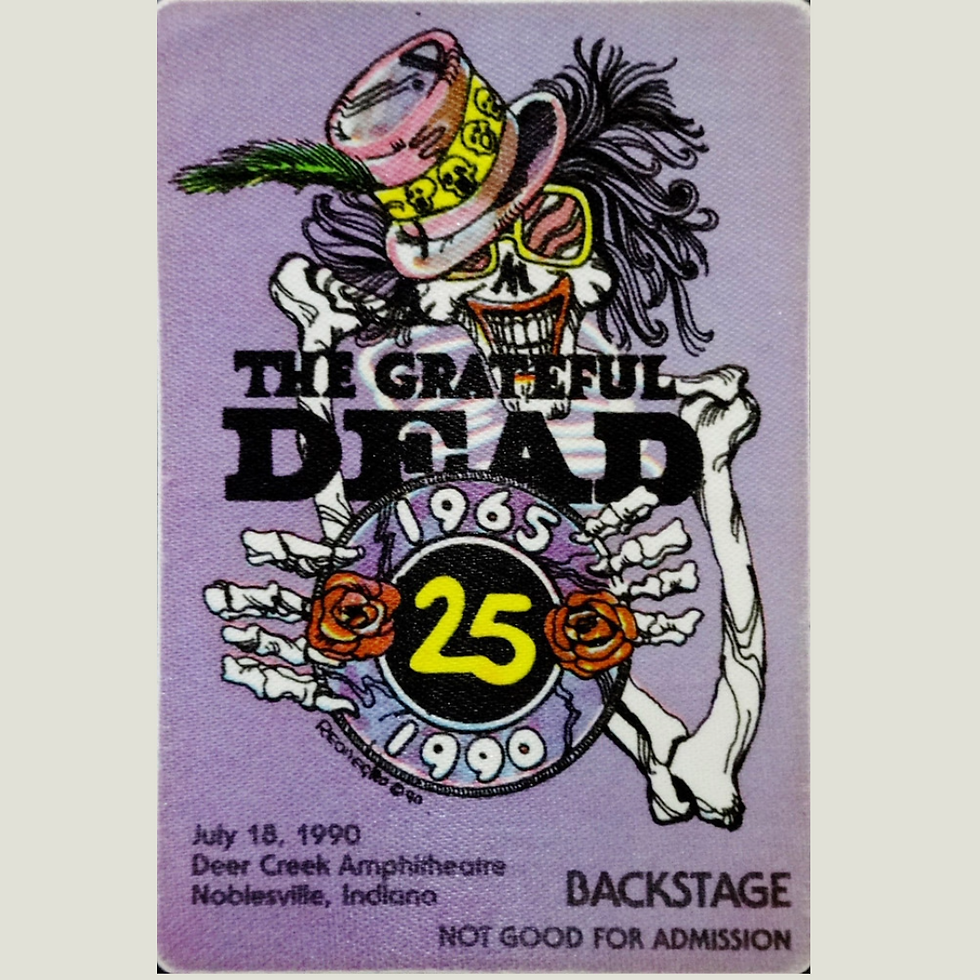
The July 18, 1990 show at Deer Creek—captured on Dave’s Picks Volume 40—kicked off that two-night run with authority. The band sounds sharp and joyful from the very first notes, and the energy doesn’t let up all night.
The first set opens with one of my favorite trio sequences: Help on the Way > Slipknot! > Franklin’s Tower. It's a powerful, confident opener, with each piece flowing smoothly into the next—tight transitions, sparkling leads, and a joyful peak in Franklin’s. After that, the whole set settles into a comfortable but energized groove. New Minglewood Blues has a good snarl to it, and When I Paint My Masterpiece is delivered with warmth and clarity. Brown Eyed Women feels crisp and upbeat, while Cassidy stretches its wings a bit with a snaky little jam. Deal wraps the set with classic late-era fire—Jerry digs in and just lets it fly.
The second set is stacked with movement and mood. China Cat Sunflower > I Know You Rider brings that bright, celebratory lift, and it rolls directly into a beautifully phrased Terrapin Station, where the band takes its time and lets the melody breathe. The jam that follows leans into abstraction, teasing ideas without rushing resolution, which opens the door for a powerful The Other One > Morning Dew pairing. Other One arrives with a jolt and spirals outward, while Morning Dew anchors the stretch with gravity and grace—one of those emotionally resonant versions where Jerry seems to pause on every word. And then they go and encore with The Weight, which closes things on a soulful note—Brent and Bobby trading vocals and lifting the mood one last time. It’s a show that feels both celebratory and reflective, full of sharp playing and thoughtful pacing. One of the standouts of that summer.
July 19th
7/19/1974 Selland Arena, Fresno, CA

The July 19, 1974 show at Selland Arena is a stunner from start to finish—captured beautifully on Dave’s Picks Volume 17. The Wall of Sound was in full force by this point, and you can hear its clarity and separation all over this show. It’s a big, warm, intricate night with that unmistakable ’74 sparkle and depth, and the jams are as rich as any from the era.
The first set lays down some real magic early. Bertha is full of bounce and energy, with Jerry clearly dialed in right out of the gate. Scarlet Begonias is still in its early, standalone form here, but it already has that lyrical lift and rhythmic sway that make it such a treasure. And then comes a huge Playing in the Band, which stretches way out and just keeps unfolding—elastic, dynamic, and full of turns that feel as spontaneous as they are locked-in.
The second set really takes things up a notch. He’s Gone opens with a gentle, soulful delivery that slowly widens into something exploratory before sliding into Weather Report Suite. That whole sequence—Let It Grow > Spanish Jam > Eyes of the World > China Doll—is peak ’74. The Spanish Jam is absolutely a Jam Anthem version, flowing out of Let It Grow with fiery precision and then melting into Eyes, which grooves with that cascading, jazz-leaning grace. China Doll closes the stretch on a haunting, delicate note. The emotional arc from start to finish is just gorgeous. There’s a balance of freedom and finesse throughout this show that really defines the era for me. They were still writing the book on how far this music could stretch—and nights like this proved there were still plenty of chapters to come.
7/19/1990 Deer Creek Music Center, Noblesville, IN

The July 19, 1990 show at Deer Creek wrapped up the two-night stand in strong fashion. Most of the performance is captured on Dave’s Picks Volume 40, with U.S. Blues from the encore appearing on Dave’s Picks Volume 41, rounding out the complete experience. While I personally lean a little more toward the previous night, this show is still a standout and has some great moments that stick with me.
The first set has a steady, classic vibe. Jack Straw opens with swagger and tight interplay, the kind of version that sets a grounded tone right away. Desolation Row hits especially well—Bobby delivers the verses with conviction, and Brent colors the background beautifully. I also really dig the version of Promised Land—brisk, full of punch, and a great way to send the set into the break with a jolt of energy.
The second set starts in an unexpected place. Victim or the Crime might not be everyone’s favorite, but I think it works here—dense and tense, it sets up a surprisingly fluid move into Foolish Heart, which feels earnest and well-balanced. Then comes Playing in the Band, and this version has some real character to it. The jam is exploratory without being meandering, and the segue into China Doll is graceful. Jerry leans into China Doll with real emotional clarity—one of the more compelling takes from this era. But the real treat comes when they pivot into Uncle John's Band—the only time that combination of Playing > China Doll > Uncle John's was played in 1990 and only the third time ever. That sequence alone makes this set feel like something special.
To close the second set, they launch into a high-energy Not Fade Away that really crackles. The crowd picks up the chant and carries it all the way through set break until the encore—creating that electric, shared-moment magic that only the Dead could spark. All told, a deeply satisfying show with enough uniqueness to make it worth returning to, even stacked up against the heavyweight from the night before.
July 20th
7/20/1994 Deer Creek Music Center, Noblesville, IN

The first set is strong from top to bottom. Feel Like a Stranger opens with swagger, locking into a groove that immediately pulls you in. Peggy-O is delicate and beautifully phrased—Jerry sounds tender and invested. There’s a 20-beat intro to Beat It On Down The Line. I also love the way High Time lands here—slow, soulful, and played with intention. The Memphis Blues Again is a huge treat, making a surprise return after a 58-show absence and standing as the only version they played in all of ’94. It’s gritty and fun, a perfect fit for the summer heat. You also get the first performance of Childhood’s End, which never became a staple, but it’s still interesting to hear Phil’s experimental side on display.
The second set opens in a sweet, unexpected way with Box of Rain, and that energy flows nicely into Here Comes Sunshine—loose and glowing, not overcooked, just right. The debut of Matilda with vocals adds a quirky surprise to the middle of the set, and then things settle into more familiar terrain with Uncle John’s Band rising gently out of Space—always a welcome move, and this version feels especially heartfelt. Morning Dew closes the set with weight and purpose, not the most explosive version I’ve heard, but one that carries that quiet, emotional heft that gives it lasting resonance. For ’94, this one has a lot going for it—surprises, sharp playing, and a sense that the band was still willing to take chances, even deep into the journey.
BTW, If you're not yet familiar with Jam Anthem versions of songs you can read all about it in Deadology II by Howard Weiner. Check it out here along with all his other great books.
And that's all for now! Of course, if you want to follow along in your very own copy of my book On This Day In Grateful Dead History: A Daily Listening Journal I still have some copies available here. Once they're sold out, I won't be getting any more made. The costs of printing and shipping has almost doubled in the last few years since I had them printed, and I've decided it's just not worth it. So get one now while you can! https://www.gratefuldeadbook.com/tigdh


Comments